Cómo Funcionan los Draws de Construcción: Guía de Financiamiento para Inversores y Desarrolladores
En el ámbito del financiamiento comercial y la inversión inmobiliaria en Estados Unidos, los préstamos para construcción (Construction Loans) y remodelación (Fix & Flip) operan de forma muy distinta a una hipoteca tradicional. Cuando un prestamista aprueba un crédito de construcción, no entrega el 100% del dinero el día del cierre. En su lugar, el capital se libera gradualmente mediante un sistema conocido como Draws de Construcción (Construction Draws).
Comprender la mecánica de los draws es crucial tanto para inversores internacionales que gestionan proyectos a distancia como para desarrolladores locales que buscan mantener el flujo de caja activo y evitar paralizaciones en la obra.
1. ¿Qué es un Draw de Construcción y el Draw Schedule?
Un draw es cada uno de los desembolsos parciales de dinero que el prestamista libera de la línea de crédito de construcción a medida que se completan fases específicas del proyecto.
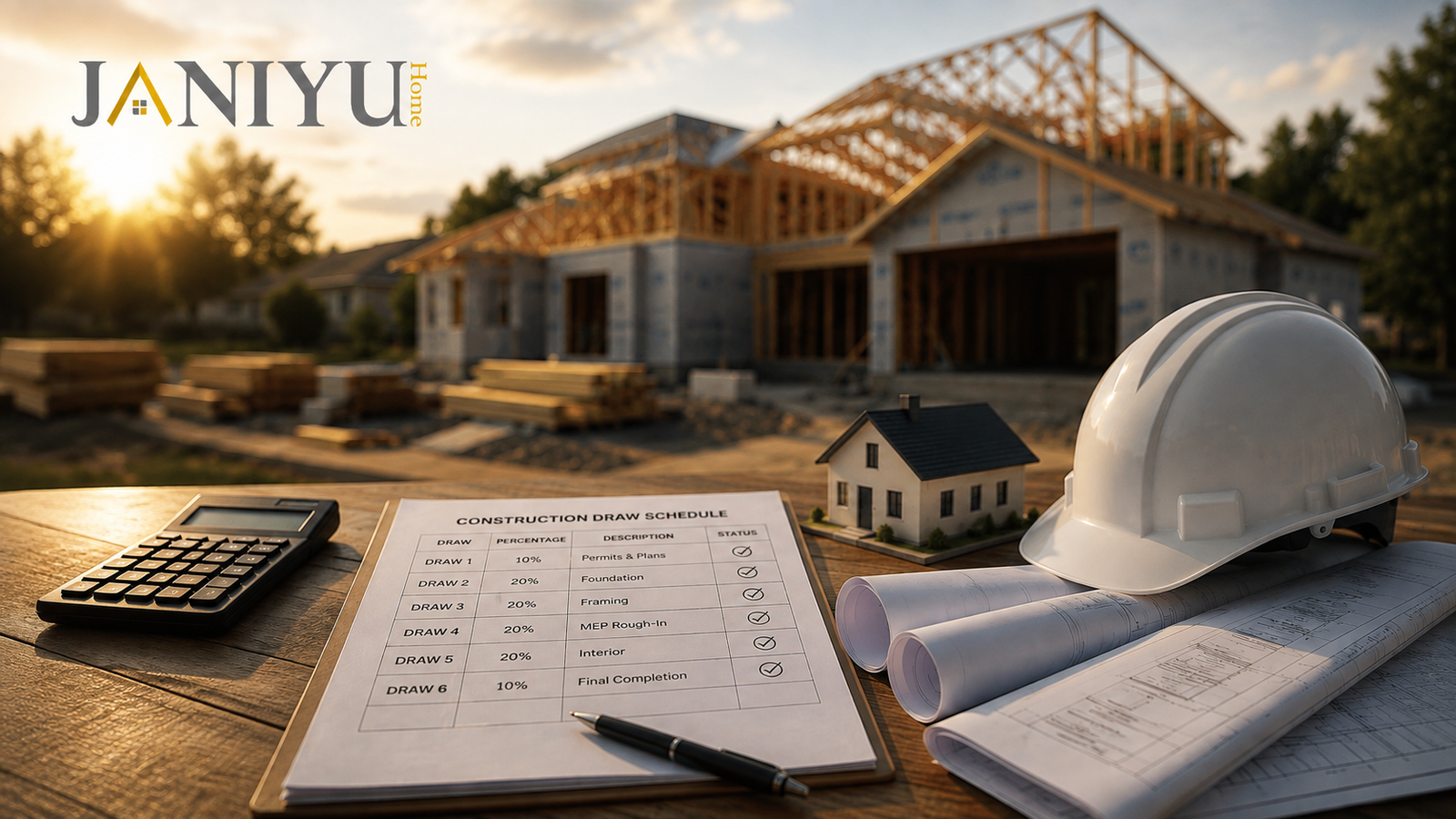
Antes de comenzar la obra, el prestatario, el contratista general (General Contractor) y el prestamista acuerdan un Calendario de Desembolsos (Draw Schedule). Este documento vincula el presupuesto detallado de la obra (Line-Item Budget) con hitos de avance físicos verificables.
Ventajas del sistema de draws:
- Para el inversor/prestatario: Solo paga intereses sobre el capital que ya ha sido desembolsado (Interest-Only on Drawn Balance), reduciendo drásticamente el costo financiero durante la fase de obra.
- Para el prestamista: Mitiga el riesgo asegurándose de que cada dólar entregado corresponda a un valor real añadido a la propiedad.
2. El Proceso Paso a Paso para Solicitar un Draw
El ciclo de un draw se repite periódicamente (usualmente entre 4 y 7 veces a lo largo del proyecto, o de forma mensual) siguiendo esta secuencia operativa:
┌────────────────────────┐ ┌────────────────────────┐ ┌────────────────────────┐
│ 1. Avance de Obra y │ ───► │ 2. Inspección de Campo │ ───► │ 3. Entrega de Lien │
│ Solicitud de Draw │ │ (*Third-Party*) │ │ Waivers │
└────────────────────────┘ └────────────────────────┘ └───────────┬────────────┘
│
┌────────────────────────┐ │
│ 4. Aprobación y │ ◄────────────────┘
│ Desembolso de Fondos│
└────────────────────────┘
Paso 1: Finalización del Hito y Solicitud
El contratista completa una etapa del proyecto (por ejemplo, el vertido de cimientos o la estructura de madera/framing). El prestatario envía al prestamista un formulario formal de solicitud de desembolso (Draw Request), desglosando los costos incurridos según el presupuesto aprobado.
Paso 2: Inspección Presencial o Digital
El prestamista envía a un inspector independiente a la propiedad para verificar que el trabajo descrito ha sido completado según los planos y normativas. En el caso de inversores extranjeros o plataformas modernas de préstamos privados, este proceso se apoya frecuentemente en reportes fotográficos, video en alta definición y verificación geolocalizada.
Paso 3: Entrega de Renuncias de Embargo (Lien Waivers)
Para liberar los fondos, el prestamista exige que el contratista general y los subcontratistas firmen un Lien Waiver. Este documento legal confirma que han recibido el pago por la etapa anterior y renuncian al derecho de colocar un embargo preventivo (Mechanic's Lien) sobre la propiedad por esos trabajos.
Paso 4: Desembolso de Fondos
Una vez aprobado el informe de inspección y verificados los Lien Waivers, el prestamista transfiere los fondos a la cuenta bancaria de la LLC del prestatario (o directamente al contratista/agencia de títulos, según el acuerdo).
3. Ejemplo Ilustrativo de un Draw Schedule (Presupuesto de $300,000 USD)
En un proyecto residencial de construcción nueva o rehabilitación severa, el calendario de draws suele estructurarse de la siguiente manera:
| Draw # |
Hito de Construcción / Etapa |
Porcentaje del Presupuesto |
Monto Desembolsado |
| Draw 1 |
Limpieza de terreno, excavación y cimientos (Foundation) |
15% |
$45,000 |
| Draw 2 |
Estructura exterior, techo y cerramientos (Framing & Roofing) |
25% |
$75,000 |
| Draw 3 |
Instalaciones de fontanería, electricidad y HVAC (Rough-Ins) |
20% |
$60,000 |
| Draw 4 |
Enyesado, aislamiento y acabados interiores (Drywall & Trim) |
25% |
$75,000 |
| Draw 5 |
Acabados finales, pintura, paisajismo y certificado de ocupación |
15% |
$45,000 |
| TOTAL |
Proyecto Completado |
100% |
$300,000 |
4. Conceptos Clave que Todo Inversor Debe Conocer
1. Fondo de Retención (Retainage / Holdback)
Es común que los prestamistas retengan entre un 5% y un 10% del monto de cada draw hasta la finalización total del proyecto. Este fondo de reserva se libera al final, cuando la ciudad emite el Certificado de Ocupación (Certificate of Occupancy - CO) y se confirma que no existen embargos pendientes de subcontratistas.
2. Capital Inicial de Arranque (Working Capital)
La mayoría de los préstamos de construcción operan bajo un modelo de reembolso. Esto significa que el inversor o contratista debe financiar el inicio del primer hito con su propio capital de trabajo. El Draw 1 reembolsa el dinero invertido en esa primera etapa una vez inspeccionada.
3. Pago Único de Intereses (Interest-Only Payments)
Durante la fase de construcción (que suele durar entre 6 y 18 meses), el prestatario solo paga los intereses acumulados sobre la cantidad gastada. Por ejemplo, si el crédito total es de $500,000 pero solo se han liberado $100,000 en el primer draw, los intereses mensuales se calcularán únicamente sobre los $100,000.
5. Diferencias Operativas: Inversores Extranjeros vs. Locales
- Inversores Internacionales (Non-US Residents): La gestión de los draws requiere una coordinación precisa. La LLC de Wyoming o Delaware debe contar con una cuenta bancaria comercial en EE. UU. lista para recibir las transferencias. Un equipo de administración de obra (Project Manager) local o un contratista general con experiencia en atender inversores remotos es fundamental para gestionar las inspecciones sin contratiempos.
- Inversores Locales (U.S. Residents): Tienen la ventaja de coordinar las inspecciones presenciales de forma directa y agilizar la firma física de Lien Waivers con los subcontratistas locales.
Como Business Loan Brokers: ¿Cómo Optimizamos tus Draws?
Un error en la planificación del draw schedule puede estrangular el flujo de caja de tu proyecto y provocar paralizaciones costosas en la obra.
Como Brokers de Préstamos Comerciales e Inmobiliarios, ayudamos a nuestros clientes a:
- Negociar un Draw Schedule Flexible: Diseñamos un calendario de desembolsos adaptado a los tiempos reales del contratista y a la disponibilidad de capital de trabajo del inversor.
- Seleccionar Prestamistas con Procesos Ágiles: Conectamos la operación con prestamistas privados (Private / Hard Money Lenders) que procesan inspecciones y desembolsan fondos en 48–72 horas, en lugar de semanas.
- Coordinar la Documentación: Supervisamos la entrega de Lien Waivers, presupuestos por línea de partida y reportes de inspección para asegurar cierres sin fricción.
How Construction Draws Work: A Financing Guide for Investors and DevelopersIn the U.S. commercial financing and real estate investment market, Construction Loans and Fix & Flip Loans work very differently from traditional mortgages. When a lender approves a construction loan, the full loan amount is not disbursed at closing. Instead, the construction funds are released gradually through a system known as Construction Draws.
Understanding how draws work is essential for both international investors managing projects remotely and local developers who need to maintain sufficient cash flow and prevent costly construction delays.
1. What Is a Construction Draw and a Draw Schedule?
A draw is a partial disbursement of funds that the lender releases from the construction loan as specific phases of the project are completed.
Before construction begins, the borrower, the General Contractor (GC), and the lender typically establish a Draw Schedule. This document connects the project's detailed Line-Item Budget to specific, verifiable construction milestones.
Advantages of the Draw System
- For the investor/borrower: Depending on the loan structure, interest may be charged only on the funds that have actually been disbursed (Interest-Only on Drawn Balance), helping reduce financing costs during construction.
- For the lender: The system helps mitigate risk by verifying that funds are being released in connection with actual progress and value added to the property.
2. Step-by-Step Process for Requesting a Draw
The draw cycle is repeated throughout the project—often several times during construction or on a monthly basis—following a process similar to this:
1. Construction Progress & Draw Request → 2. Third-Party Inspection → 3. Lien Waivers → 4. Approval & Fund Disbursement
Step 1: Milestone Completion and Draw Request
The contractor completes a specific phase of the project—for example, pouring the foundation or completing the framing.
The borrower then submits a formal Draw Request to the lender, detailing the costs incurred according to the previously approved construction budget.
Step 2: On-Site or Digital Inspection
The lender may send an independent inspector to the property to verify that the reported work has actually been completed according to the plans and applicable requirements.
For foreign investors and lenders using modern construction-management platforms, this process may also incorporate photographic reports, high-definition video, and geolocation-based verification.
Step 3: Submission of Lien Waivers
Before releasing funds, lenders commonly require the General Contractor and/or subcontractors to provide Lien Waivers.
A lien waiver is a legal document through which a contractor or subcontractor waives certain rights to file a Mechanic's Lien against the property for work or payments covered by the waiver.
The exact requirements and legal effect of lien waivers vary by state.
Step 4: Fund Disbursement
Once the inspection has been approved and the required documentation has been verified, the lender releases the applicable construction funds.
Depending on the loan structure, funds may be transferred to the borrower's LLC bank account, directly to contractors, through a title company, or through a specialized draw-management service.
3. Example of a Draw Schedule for a $300,000 Construction Budget
For a new residential construction project or substantial rehabilitation, a simplified draw schedule could look like this:
| Draw # | Construction Milestone / Phase | % of Budget | Amount Disbursed |
|---|
| Draw 1 | Site preparation, excavation & foundation | 15% | $45,000 |
| Draw 2 | Framing, roofing & exterior enclosure | 25% | $75,000 |
| Draw 3 | Plumbing, electrical & HVAC rough-ins | 20% | $60,000 |
| Draw 4 | Insulation, drywall & interior finishes | 25% | $75,000 |
| Draw 5 | Final finishes, painting, landscaping & Certificate of Occupancy | 15% | $45,000 |
| TOTAL | Completed Project | 100% | $300,000 |
This is an illustrative example. Actual draw schedules are determined by the lender, construction budget, contractor, property type, and scope of work.
4. Key Concepts Every Investor Should Understand
1. Retainage / Holdback
Some lenders or construction arrangements may retain a percentage of each draw until specific requirements or project milestones have been satisfied.
For example, a portion of the funds may remain withheld until final completion, required inspections are approved, outstanding lien issues are resolved, and—when applicable—the local authority issues a Certificate of Occupancy (CO).
2. Working Capital
One of the most important issues investors should understand is that many construction and Fix & Flip draw programs operate on a reimbursement basis.
This means the investor or contractor may need sufficient working capital to begin construction and pay for certain work before receiving reimbursement from the lender.
For example, the investor may initially fund the first phase of construction. Once the work is completed, inspected, and approved, the lender releases the corresponding draw.
This makes working-capital planning critical when structuring a construction loan.
3. Interest-Only Payments
Many construction loans use an interest-only structure during the construction period, which may typically last several months or longer depending on the project.
Depending on the lender's loan structure, interest may be calculated on the amount of capital that has actually been disbursed rather than the entire construction facility.
For example, if the total approved loan is $500,000, but only $100,000 has been disbursed, the interest calculation may initially be based on that $100,000 balance.
5. Operational Differences: Foreign vs. Local Investors
International Investors (Non-U.S. Residents)
Managing construction draws remotely requires careful coordination.
The borrowing entity may need a U.S. business bank account capable of receiving and distributing project funds. Having an experienced local Project Manager or General Contractor can also be extremely valuable for coordinating inspections, subcontractors, documentation, and draw requests while the investor remains abroad.
Local Investors (U.S. Residents)
Local investors may have the advantage of being able to visit the project personally, communicate directly with contractors and subcontractors, and coordinate inspections and documentation locally.
However, the underlying draw requirements are still dictated by the lender and loan program.
As Business Loan Brokers: How Do We Help Optimize Your Construction Draws?
A poorly structured Draw Schedule can put significant pressure on a project's cash flow. Even a profitable development can encounter problems if contractors need to be paid before the next lender disbursement becomes available.
As Business and Commercial Real Estate Loan Brokers, we help our clients evaluate these issues before financing is finalized.
Our role may include:
- Structuring a Practical Draw Schedule: We help evaluate a disbursement schedule that reflects the contractor's actual construction timeline, the project's Line-Item Budget, and the investor's available working capital.
- Identifying Lenders with Efficient Draw Processes: Draw-processing times vary considerably among lenders. We evaluate lender programs not only by interest rate and leverage, but also by inspection procedures, reimbursement requirements, draw fees, holdbacks, and expected disbursement times.
- Coordinating Documentation: We help keep the financing process organized by coordinating required documentation such as Draw Requests, Line-Item Budgets, inspection reports, and Lien Waivers.
Ultimately, the best construction loan is not simply the one offering the most capital or the lowest rate. The draw structure must also match the project's real cash-flow needs.